Tax Drag: The Return You Lose Without Noticing
Paying attention to tax is one of the highest-leverage jobs in a portfolio, and one of the least scrutinised. Here is where the drag comes from, why the account wrapper matters more than the fund, and what not to do.

Paying attention to investment tax is one of the highest-leverage jobs in a portfolio, not only for people who argue for an hour over a 0.2% fee but for anyone who treats the annual tax document as a fact of life rather than a choice. The work involves knowing where the drag comes from, using the holding period, filling tax-advantaged accounts first, putting the right assets in the right wrappers, and then not riding a deteriorating company down just to avoid a bill.
On the other hand, the same fund held in a sheltered account instead of a taxable one can be worth substantially more over a working life. Nothing about the investment changed. Only the container. Fill available tax-advantaged space first, always take the employer match before anything else, and you have already done more than most fund-picking arguments ever will.
Here are some things you can do to cut tax drag without turning the tax tail into the whole decision.
Scope note: tax rules differ by country and change often. This is the structure of how investment tax works, not advice on your own situation.
Where the drag actually comes from
Three separate events, taxed differently in most systems. Capital gains are tax on the profit when you sell, and generally only when you sell, which means unrealised gains usually go untaxed and the timing of a sale is partly yours to control. Dividends are taxed in the year received, whether or not you spend them, and reinvesting does not defer that. Interest from bonds and cash is often taxed at the least favourable rate of the three.
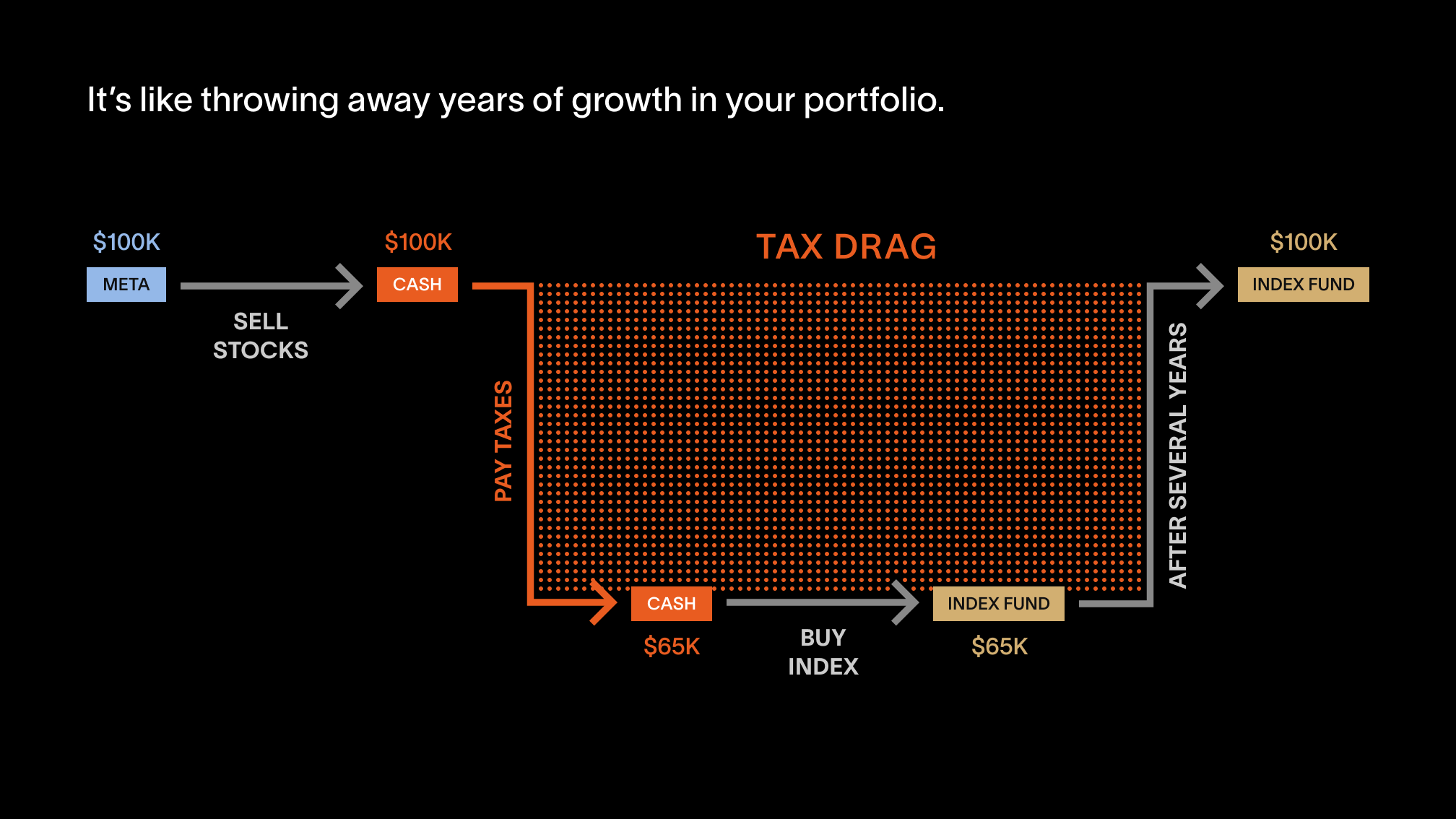
The pattern underneath: money you receive is taxed now, money that merely grows is taxed later, and later is worth a great deal. That is because deferral is itself a return. Tax you have not paid yet stays invested and compounds for you, which is why an investor who trades frequently pays along the way and permanently removes capital that would otherwise have kept working.
Holding period matters for the same reason. Many countries tax short-term gains more heavily, with a threshold, often a year, splitting the two. Being right about a stock and selling at month eleven can leave you with less than being slightly less right and selling at month thirteen.
A $100,000 position with a $40,000 cost basis, sold and immediately reinvested, against the same position simply held. Both then grow at 8% a year.
View data tableHide data table
| Date | Held | Sold and reinvested |
|---|---|---|
| Jan 1970 | $100,000 | $88,000 |
| Jan 1970 | $125,971 | $110,855 |
| Jan 1970 | $158,687 | $139,645 |
| Jan 1970 | $199,900 | $175,912 |
| Jan 1970 | $215,892 | $189,985 |
The tax bill was $12,000. The ten-year shortfall is $25,907, because the money paid in tax stopped compounding on the day it left. The gap grows at the same rate as the portfolio, so it widens for as long as you stay invested. Illustrative only: a 20% rate is assumed, rates and treatment vary by country, and returns are never this smooth.
Four decisions that cut the drag
1. Fill tax-advantaged accounts before taxable ones. The wrapper matters more than the investment inside it. A 401(k), IRA, ISA or superannuation account shelters growth entirely or until withdrawal, so the same fund held in one can be worth substantially more over a working life with nothing about the investment changed. Work out how much sheltered space you have available this year and use it before opening a taxable position. See Roth vs. Traditional for which type fits.
2. Put income-producing assets in the shelter. Bonds and dividend-focused funds generate taxable income every year regardless of what you do, so they benefit most from being sheltered. Broad low-turnover index funds are already tax-efficient and cope best in a taxable account. Same holdings, same risk, better after-tax result purely from where each one sits, which makes this one of very few genuinely free improvements available.
3. Trade less, and prefer low-turnover funds. Every realised gain hands over capital that would otherwise keep compounding, so turnover is a tax decision as much as a strategy one. Check the turnover figure on any fund's factsheet before buying it for a taxable account: a fund cycling through most of its holdings annually will generate distributions you did not ask for, in years you did not choose.
4. Know your own holding-period threshold before selling. Look up where the short-term and long-term line falls in your jurisdiction, then check the purchase date before any sale that is close to it. Selling a few weeks early can cost more than the price move you were reacting to, and it is entirely avoidable with a calendar.
What not to do
Do not hold a deteriorating investment purely to defer a tax bill. People ride a bad company down for years to avoid a payment that would have been a fraction of the eventual loss, and the tax tail ends up wagging the investment dog. Make the investment decision first on its merits, then handle the tax consequence.
Do not reorganise your portfolio around tax-loss harvesting either. It is genuinely useful and routinely oversold: most jurisdictions block repurchasing the same asset immediately, the benefit is usually deferral rather than elimination, and the complexity only pays at meaningful account sizes. Worth knowing about, not worth building a strategy on.
Where this leaves you
Three things, in order. Use every bit of tax-advantaged space available to you before investing in a taxable account. Move income-producing assets into the shelter and leave low-turnover index funds outside it. Then trade less than you feel like trading.
None of that requires expertise, and together it is worth more over a lifetime than almost any fund selection decision, while being considerably easier to get right.
If your jurisdiction works differently from the general shape described here, or you are weighing a specific asset location question, bring it to the Discord below. Tax is the area where local detail changes the answer most, and a general article is least useful.
FAQ
Is tax-loss harvesting worth doing? Genuinely useful, routinely oversold. Rules usually block repurchasing the same asset immediately, and the benefit is often deferral rather than elimination. Worth knowing, not worth reorganising a portfolio around.
Does asset location change my risk? No. It is the same holdings in better places. One of the few free improvements available.
What's the single biggest lever here? Filling tax-advantaged account space before investing in a taxable one. It usually outweighs every other decision on this page combined.
Not investment or tax advice. Tax rules vary by country and change; consult a qualified professional about your own circumstances.